
Match and Learn
Baby Animals
Match each baby animal to its grown-up in this free memory matching game, and learn what a baby swan, hare or hedgehog is called.
Flip two cards at a time and find every pair. Each game is shuffled when you start, so no two games are the same. Try to finish with fewer moves and mistakes by using a memory palace to remember where you saw each card.
16 games
Match each baby animal to its grown-up in this free memory matching game, and learn what a baby swan, hare or hedgehog is called.
Match each famous book to its author in this free memory matching game.
Match each cloud to its name in this free memory matching game, from wispy cirrus high up to heaped cumulus down low.
Match each country to its capital city in this free memory matching game.
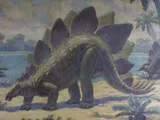
Match each dinosaur to its name in this free memory matching game, from Tyrannosaurus to Stegosaurus, shown in paintings from 1897 to 1931.
Match each famous landmark to the place where it stands in this free memory matching game.
Match each flag to its country in this free memory matching game.
Match each flower to its name in this free memory matching game, from the rose and the tulip to the passionflower and the bird of paradise.
Match pairs of difficult English words like sesquipedalian, onomatopoeia, and defenestration in this free memory matching game.
Match each historical event to the year it happened in this free memory matching game.
Match each invention to the person who invented it in this free memory matching game.
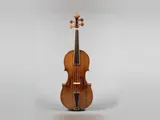
Match pairs of musical instruments, from the violin and oboe to the sitar and theremin, in this free memory matching game.
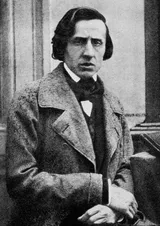
Find the pairs of famous piano composers, from Bach and Mozart to Chopin, Liszt, and Rachmaninoff, in this free memory matching game.
Match each leaf to its tree in this free memory matching game, and learn to tell a pine from a spruce from a fir.
Match each US state to its capital city in this free memory matching game.
No games match. Try another word or topic.
The classic matching game is also called Concentration, Memory, Pairs or Pelmanism. You can play it here or with any deck of cards at home.
With a deck of playing cards, a pair is two cards of the same rank and color, such as the two red sevens. For an easier game, any two cards of the same rank make a pair.
Matching is one of several types of memory games. Each trains a different part of memory.
Lay the cards face down in a grid. On each turn, turn over two cards. If they match, keep them and go again. If not, turn them back over and the next player goes. The player with the most pairs at the end wins.
It goes by Concentration, Memory, Pairs, Match Up and, in Britain, Pelmanism. Memory is the name Ravensburger gave its picture card version in 1959.
Any even number of cards, in pairs. Young children can start with six pairs. A full deck of 52 playing cards makes 26 pairs if a pair is two cards of the same rank and color, such as the two red sevens.
If you know where both cards of a pair are, take that pair first. Otherwise turn over a card you have not seen, then its partner if you know where it is, or another new card if you do not. Work through the grid in order. Say each card and its place to yourself, or picture each card at a spot in a memory palace, so you can find it again.