Learn Techniques to Improve Visualization
It’s possible to improve visualization with practice. This article describes some visualization exercises and tips that can help.
Visualization Exercises
Here are a couple of visualization exercises to experiment with.
Exercise 1
Before starting this visualization exercise, it might be a good idea to turn off your phone and put it in another room so it isn’t distracting.
- Find a small object, like a pen, cup, jar, or small toy. At first, use something that doesn’t have too much detail.
- Look at the object for about 30 seconds. Mentally trace the outlines and pay attention to the colors.
- Then close your eyes and focus on the afterimage, if there is one. Try to recreate the image in your mind.
- Repeat several times.
After you practice with a simple object for a while, try more complex objects, photographs, or artwork.
I had trouble mentally visualizing faces, so I would go out in public, look at someone’s face and then close my eyes and try to hold the afterimage in my mind for as long as possible. It took a long time, but after practicing regularly I eventually gained the ability to mentally picture faces.
If you can’t “see” anything mentally, you might want to look into aphantasia, which is an inability to form mental images.
Exercise 2
Another exercise that can help with visualization is to practice using a mind palace (also known as a memory palace). The act of creating mnemonic images and placing them in your memory palace is great visualization practice. It can also help you remember things better!
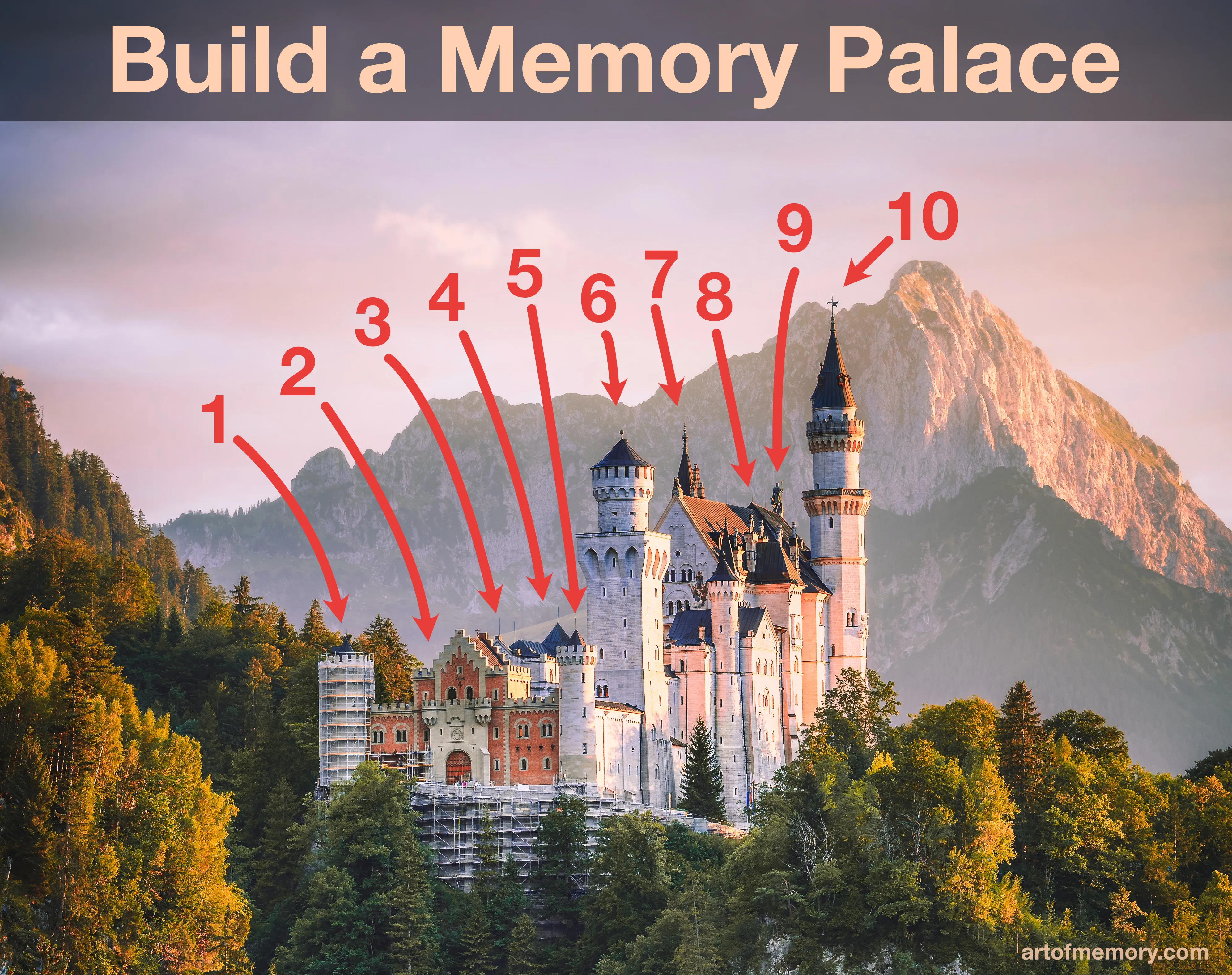
The memory palace technique involves creating an imaginary journey through a location that you know well. Then you mentally walk through that journey, stopping at fixed locations.
The memory palace could be somewhere like your bedroom or home, or even be based on virtual locations.
Regularly walking through your memory palace and visualizing the locations is great visualization practice.
For a full tutorial that uses mnemonics, see the memory palace page.
Tips on Improving Visualization
Check out some of these tips and discussions about improving visualization:
- Improving Visualization
- Visualization exercises
- Problems with visualization - any advice?
- Strategies for improved visual memory
- Is there any book to aid visualization capacity?
- I am terrible at visualization. What methods are there that don’t involve visualizing objects and locations?
- How well can you visualize?
- I would like help with first steps in Visualization
- How vivid visualization skills are required to become proficient in Loci method?
- How to improve visualization and mental imagery?
- Tips on how to increase visualization?
- A question about visualization
- The ability to visualize/Imagine things with your eyes open/closed ( Mental imaging ) thread
- Visualizing
- How to improve visual memory
- Differences between Personality Types when it comes to visualization / memorization
- How to go about visualizing memory palaces?
- On the topic of visualization
- Visualizing in the 3rd Person VS First Person
See Also
If you’re interested in visualization, also check out these pages:
- Aphantasia and Memory — aphantasia is the lack of ability to visualize images
- Synesthesia and Memory — synesthesia is when senses crossover with each other, for example, when someone’s mind automatically associates numbers with colors, or number sequences with angles.
