My Memory Diet

1-minute read Updated on

I’m still trying to figure out an ideal diet for the brain. I’m guessing that it’s probably similar to an ideal diet for any other part of the body.

Related: see Foods to Improve Memory and Natural Ways to Improve Memory.

At the moment, I think my current diet is fairly good. For breakfast, I have oatmeal with dried fruits and nuts, including prunes “dried plums” which have very high levels of antioxidants [PDF]. I also have a small glass of carrot juice.
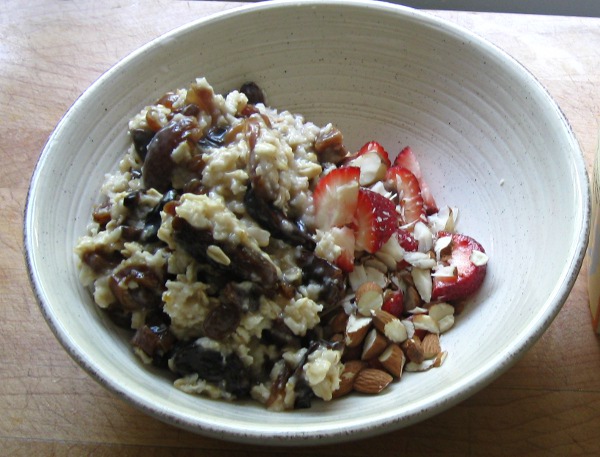
Oatmeal photo

For my other two meals I try to eat either brown rice or whole grain bread, along with pickled herring (high omega-3, low mercury), sauerkraut, and vegetables like chard, spinach, cabbage, or collards. Sometime during the day, I try to eat a banana or apple. Every few days I have an egg or two, or maybe some chicken livers.

I’m also addicted to pho (beef soup with tendons) and coconut curry tofu.

I started drinking a glass of grape juice every day.
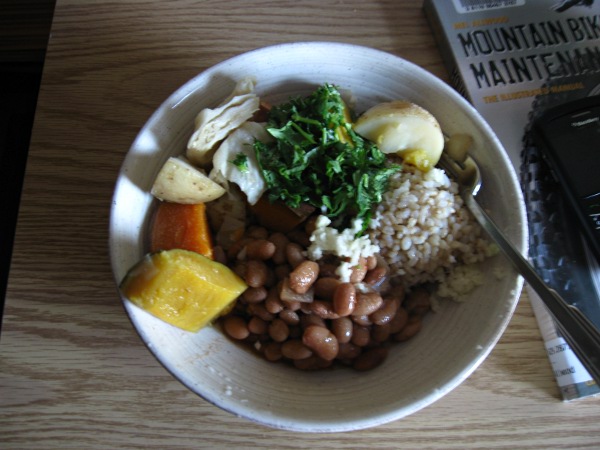
Rice, beans, vegetables

February isn’t looking like it will be as healthy though: I’m going to be in Ireland and eating out at restaurants a lot.

In the end, I think things like training, lack of stress, and good sleep are going to be more important than diet. In any case, I feel better when I eat this way, and I’ve lost 10 pounds in the past month…

Do you think it’s worth paying attention to diet?

Feedback and Comments

What did you think about this article? Do you have any questions, or is there anything that could be improved? We would love to hear from you! You can leave a comment after clicking on a face below.

Comments

Dan
Dan

I've been a vegan for 14 years and a strict vegan for 2 years and I'll be. VegN for life. A large part of my diet is raw mixed vegetables (peas, carrots, green beans, Lima beans, corn) with white rice (I know the latter isn't great, but it makes the meal 100 times better). Earlier this year I considered being a fruitarian, eating only bananas, but the cost is too much for me. There is a marathoner (who also is CEO of a computer company), Mike Arenstein, that lives on only 40-50 bananas a day. Noted ultrarunner and runner, Dean Karnazes, had a interesting blog about Arenstein here: http://dean.runnersworld.com/2010/03/80-10-10.html


Josh
Josh

Interesting page about the 80/10/10 diet he follows: http://www.everydiet.org/diet/80-10-10-diet


Dan
Dan

Diet is extremely important for physical health and cognitive functioning. But without a doubt the number one, most important thing someone can do for physical health and optimal cognitive functioning is daily aerobic exercise. In neuroscientist John Mendina's book "Brain Rules", he lays out the scientific basis for this along with empirical data.

Having a very streamlined (simple/boring) vegan diet is liberating. It frees you from thinking about food, what you're going to eat, etc. All this thought leads always leads to overeating and the resulting postprandial sluggishness. I would love to be able to live on just one thing (e.g., bananas), it would make life so much easier.


Josh
Josh

From Arenstein’s blog, it looks like he eats a lot more than bananas, though sometimes only one type of fruit per meal.

If "fruit" includes things like grains, beans, squash, and tomatoes, it doesn't seem that much different from a regular vegan diet.

I like the basic idea of veganism, but I don't follow it 100% every day. Every couple of days I eat small amounts of nonvegetarian things...a few pieces of pickled herring is just about every day.


Kegan Clark
Kegan Clark

http://www-news.uchicago.edu/releases/06/060413.diet.shtml

fyi even herring is contaminated with not just mercury, but also brominated flame retardants, which are a neurotoxin.


Josh
Josh

@Kegan You have any information about herring contamination? I stopped eating it every day, but still have it a couple of times per week.