How to Memorize Pi
Today is Pi Day: March 14, 2016, or 3/14/16 as written in the US. (The first digits of pi are 3.14159, which can be rounded to 3.1416.) In this post I’ll show you an easy way to memorize as many digits of pi as you would like. It’s the same technique that is used by people who memorize many thousands of digits of pi.
Before I explain the method, here’s a video introduction to the basic concepts from the 2006 USA Memory Champion:
The Technique(s)
There are two techniques involved: the major system and (optionally) the memory palace technique.
The Major System
The human brain remembers pictures much more easily than numbers. By converting the numbers into images, you can memorize thousands of digits easily. Pi memorizers often convert every possible 2-digit number into a visual image. They then remember those pictures interacting with each other.
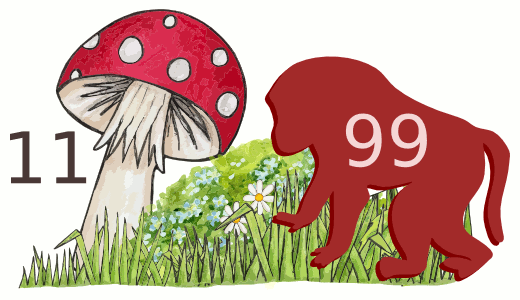
For example, the number 11 might be represented by a toadstool and the number 99 might be represented by a baboon. It may seem like extra work to add the images when only trying to remember four digits, but it’s the most effective memorization technique for longer numbers.
The major system is one way that memorizers convert numbers into images and back. Each digit is mapped to a consonant sound and the images are then built from those sounds. Here’s a list of the mappings:
0 = s or z, because “zero” starts with z and s is just an unvoiced z.
1 = t or d, because 1 looks like 1 and d is just an unvoiced t.
2 = n, because 2 looks like an n on its side.
3 = m, because 3 looks like an m on its side.
4 = r, because the word “four” ends with r.
5 = l, because if you hold out your left and, you can make an L shape with your hand, and your hand has five fingers.
6 = sh, ch, zh, j (soft g) — you can remember that the word “George” has six letters.
7 = k or hard g, because the letter K looks kid of like two 7s stuck together.
8 = f or v, because 8 looks like a cursive f and v is just a voiced f.
9 = p or b, because 9 looks like a backwards P, and b is just a voiced p.
11 is “toadstool”, because we only look at the sounds of the first two consonants in the word: ToaDstool. According to the table above, t and d both map to 1, so the number is 11.
99 is “baboon”, because BaBoon maps to two 9s.
In the major system, you ignore vowels and the letter w, h, and y. The mappings are to consonants, not to letters, so double letters are counted as one sound if they only have one sound.
If it seems complicated, don’t worry! If you practice for a couple of hours it will become easier. We have a few suggested images in the major system database and there are some premade lists on the major system examples page.
There’s also a video about the techniques on the how to memorize numbers page.
Memory Palaces
Images can help you remember many more digits of pi than you would be able to remember without that method, but you still need a system to keep the images in order. That’s where memory palaces come in.
A memory palace (also known as the mind palace technique or the method of loci) is an imaginary journey in your mind where you can place your mnemonic images in order.
Example:
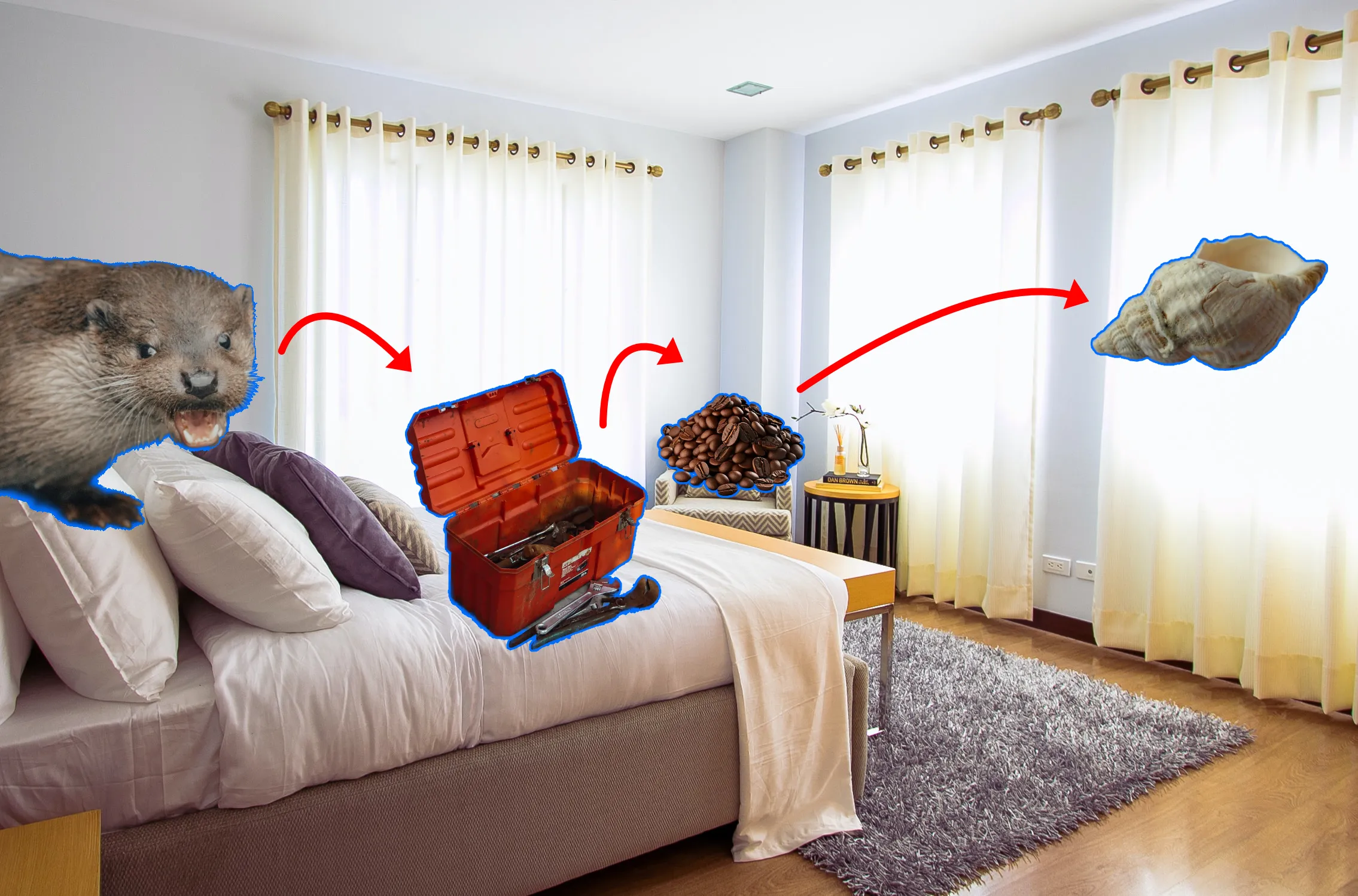
The first digits of pi are 3.14159265. Let’s forget about the 3 and the decimal point, because we can remember that without mnemonics. We’ll create 2-digit images using the major system for the others:
- 14 = oTTeR
- 15 = TooLbox
- 92 = BeaNs
- 65 = SHeLL
Each image will always represent two digits, and every possible combination of two digits (00 to 99) will be represented by just one image.
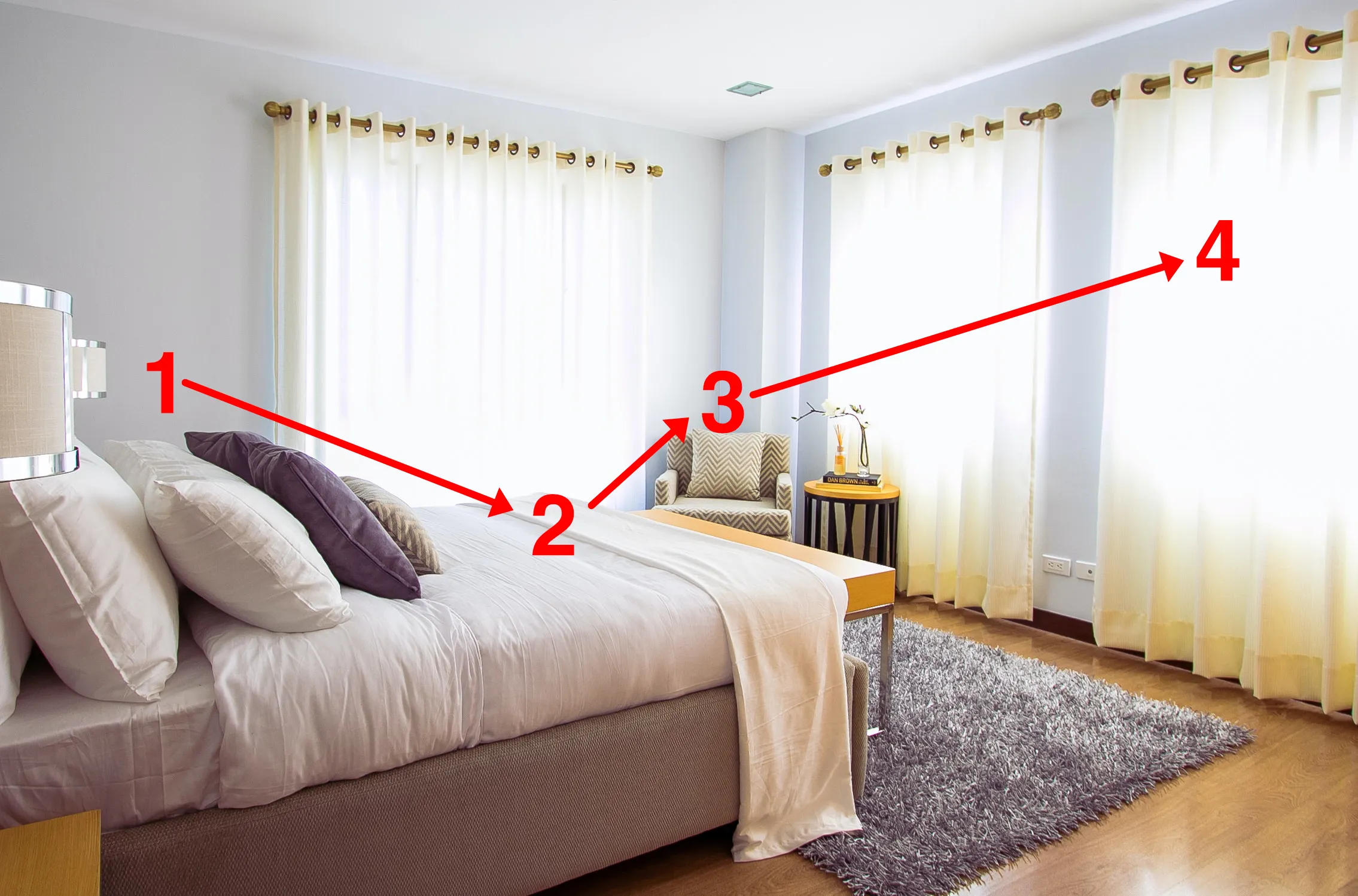
Find four points in the room that you’re sitting in. I’ll illustrate the basic concept using the following image of a bedroom, but you can create the beginnings of your own memory palace in whatever room you want.

Create a series of locations inside of the room. I tend to go left-to-right, top-to-bottom, and clockwise whenever possible. Here is an example of creating four locations in the bedroom photo:
Once you’ve chosen your locations place your mnemonic images in the locations in order: otter (14), toolbox (15), beans (92), and shell (65):
You can now recall the numbers by mentally walking through the locations of your mind palace and translating the mnemonic images back into digits. Because you will always travel through the locations in the same order, you can keep the digits in order. You can continue to expand your memory palace to hold hundreds or thousands of digits of pi — it really works!
If you have questions about mnemonics, post them in the Art of Memory Forum, and we’ll answer them there.


