Arbitrary Actions vs. Person-Action-Object System (Part 3)
Back to the drawing board. While I work on developing a functional 2-card memory system with 2,652 images, I’m using a temporary 1-card system with 52 images.
The temporary card system uses an image of one person, animal, or object per card. It’s not a person-action-object (PAO) system. I like the idea of flexible actions more than a rigid PAO system.
The problem that I’m having is that, when memorizing multiple decks using only 52 images, the images are repeating too frequently. If I try to memorize two or three decks in a row, I sometimes get the images confused even if they are in different mental journeys. A pair of images might appear together in two different journeys and it becomes difficult to remember where I saw that combination.
With 52 images and a non-PAO system, a memory palace location might contain:
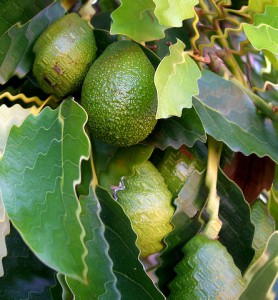
An antelope pronking (2♦) on a piano (4♥) which collapses on an avocado (8♣), squashing it.
In another deck of cards in a different journey, the avocado might also appear in the same location as either the piano or the antelope which sometimes makes the images from different decks overlap.
In a PAO system, where a slightly different order completely changes the image, or in a double card system that has 2652+ images, I’m guessing that there is little chance of seeing the same images together when memorizing multiple decks of cards.
My conclusion from this experiment is that a system for memorizing cards that has only 52 images and no compound images probably isn’t ideal for memorizing multiple decks of cards. If I’m going to memorize multiple decks (which is required during practice) with a 1-card system, I need to make it a PAO system.
Photo of avocado © avlxyz under Creative Commons License.


